June 5
Children’s Quantification of Time: A Case Study of the Comparative “More”
Kosta Boskovic
Department of Psychology, UCSD
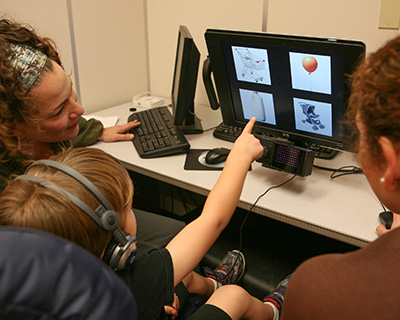
Natural language quantifiers operate over several domains of magnitude, including number, area, and time. Although many previous studies have documented children’s comprehension of quantifiers like “more” when applied to number and area, very little is known about their quantification of more abstract phenomena, such as time. This is important because previous studies find that children are slow to acquire the meanings of words that denote time. Although children begin to use and comprehend morpho-syntactic markers of tense by 2 or 3 years of age, they are slow to acquire adult-like meanings of other high-frequency temporal expressions. For example, children do not acquire adult-like meanings of duration words like “minute” or “hour” until age 6 or 7. Such findings suggest that children may struggle to encode duration information in language, raising the possibility that judgments of relative duration, as in comparative forms like “more,” might pose a challenge in acquisition. In the current study, we investigated this question by testing children’s comprehension of “more” for temporal durations. Through this investigation, we aim to shed light on which aspects of linguistically encoding time may pose the biggest challenge to children.
A Semantic Network Analysis Approach: Using Verbal Fluency as a Tool to Model the Bilingual Lexicon
Catherine Maximous
Department of Cognitive Science, UCSD
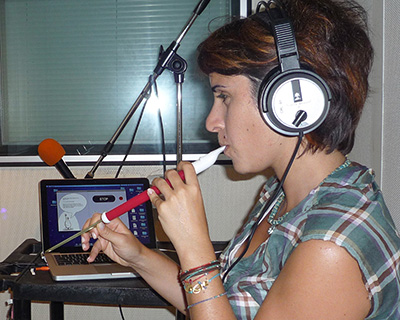
Bilinguals activate not only words from the target language, but also words from the non-target language, even when that language is not required. This well-supported finding of cross-language activation is evidence that the bilingual mental lexicon contains words from two languages that remain active at all times. However, less work has examined how co-activation may shape access to semantic knowledge across the two languages. In this study, we recruited 44 heritage Spanish-English bilinguals from the Southern California region and administered a semantic verbal fluency task to examine the representation of semantic knowledge. Using a network science approach, we calculated three key network metrics: average shortest path length (ASPL), clustering coefficient (CC), and modularity (Q). Preliminary results suggest that, across both languages, bilinguals’ networks show significant clustering, meaning their networks are highly interconnected. These findings are preliminary, but may suggest that a life experience of using two languages can further reveal the interaction between cognitive processes and language use.